Custom Software Built Around the Way Your Business Works
Build software around your business processes, workflows and requirements instead of forcing your organization to adapt to an off-the-shelf system.
When Standard Software Doesn't Fit
Businesses often have workflows, rules, integrations and operational requirements that do not fit neatly into an off-the-shelf product.
Spreadsheets & Manual Workarounds
Data FragmentationTeams maintain offline spreadsheets, calculate pricing manually, and re-key data between disconnected tools.
Inflexible Predefined Menus
Process FrictionPackaged SaaS platforms force your operational teams to alter verified processes to match generic software limitations.
Disconnected Databases & Silos
Lost VisibilityOperations, accounting, and customer records sit in separate applications without automated real-time synchronization.
Software Designed Around Your Workflow
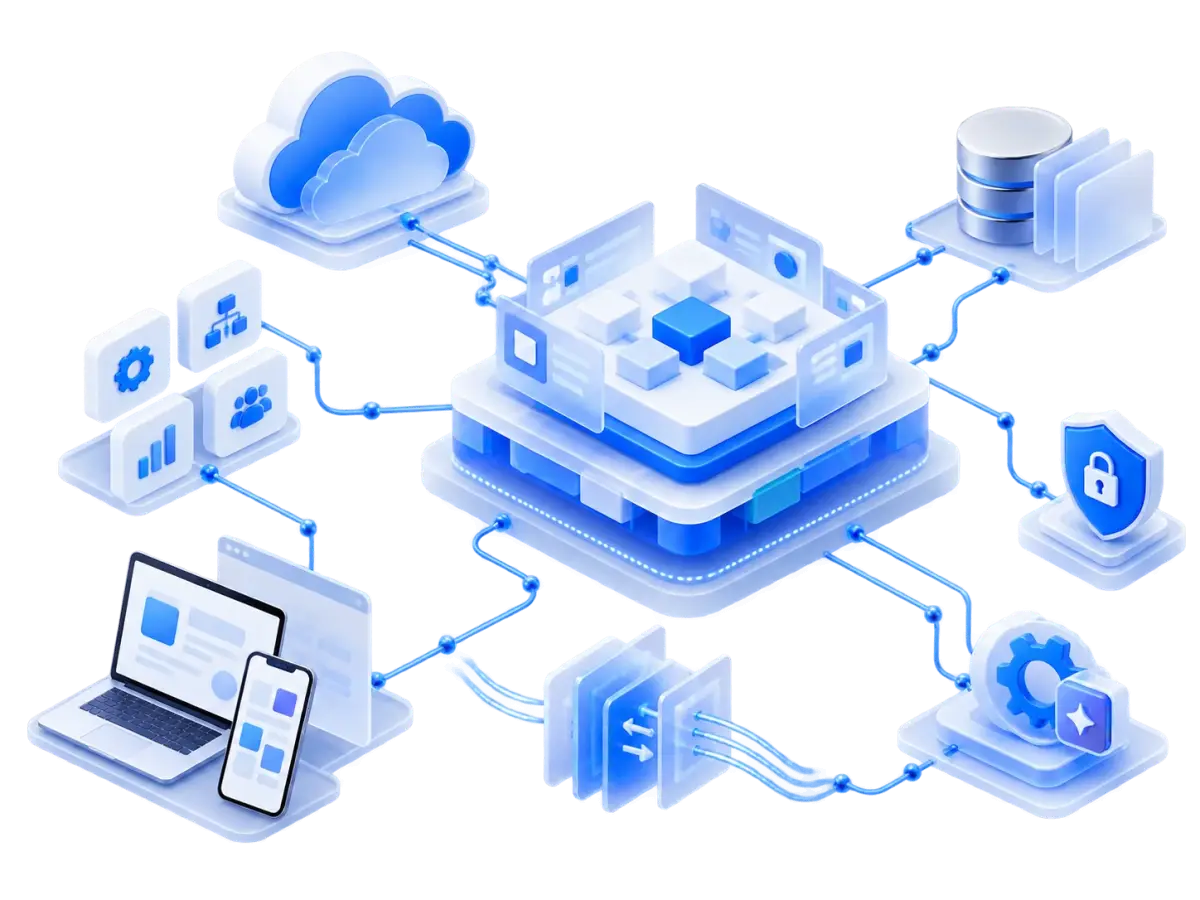
Instead of altering your operating model to fit a software package, Rudram engineers software directly around your proprietary approval matrices, business rules, and user roles.
Proprietary Business Logic
Tailored calculation engines, custom multi-tier pricing, commission matrices, and automated regulatory compliance validation.
Granular RBAC & Data Security
Strict role-based permissions, multi-branch data partitioning, non-repudiation audit trails, and encrypted credential storage.
Tailored Registers & Real-Time Reporting
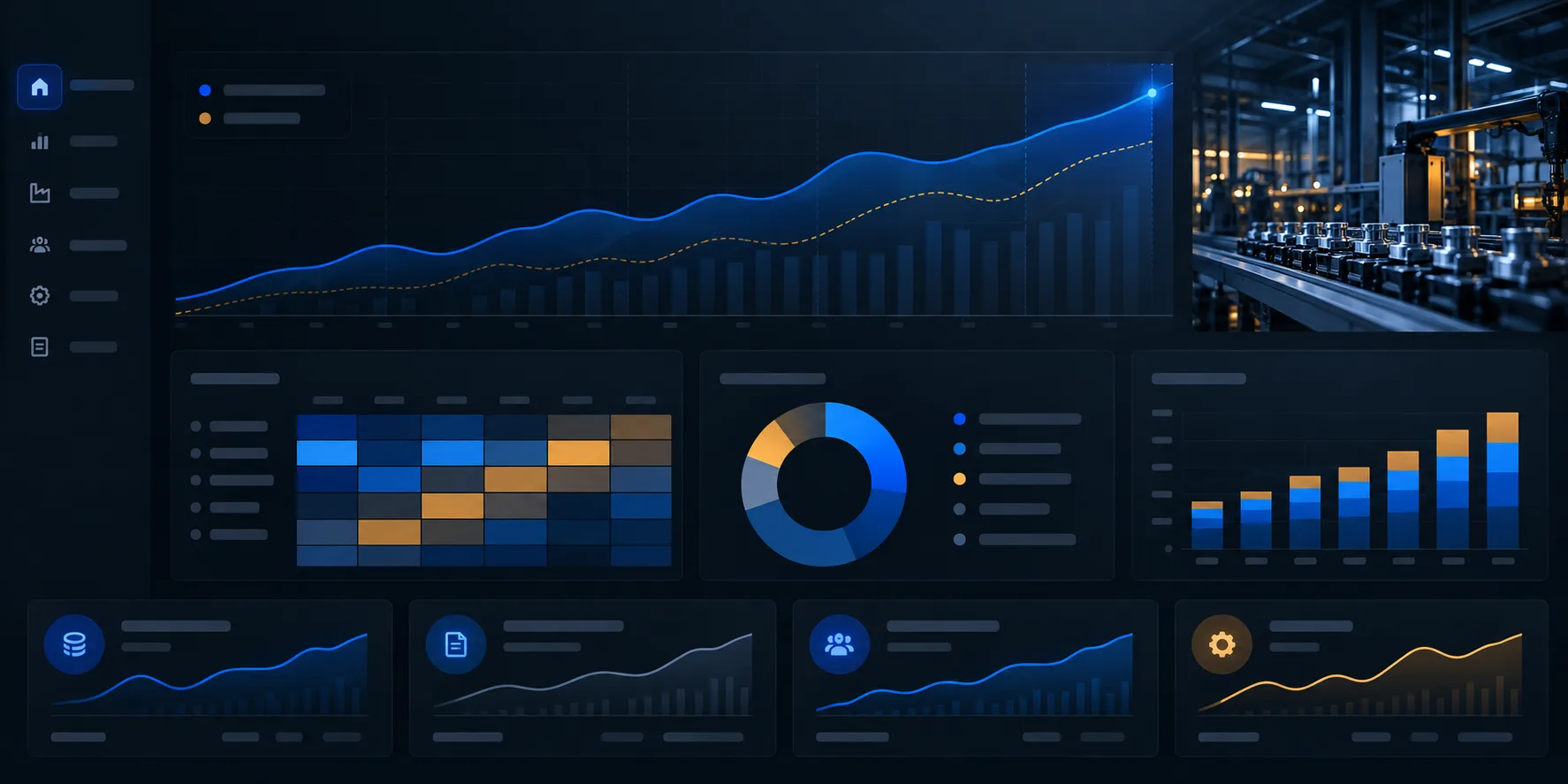
Centralized operational visibility built specifically for your executive and frontline teams, with automated scheduled exports.
What Can Custom Software Become?
Custom software is not a rigid template. It is assembled and engineered around the specific operational pillars your organization requires.
Business Applications
Bespoke departmental workflow tools, transactional registers, and custom approval matrices.
Enterprise Platforms
Multi-branch corporate software unifying finance, workforce, and operational oversight.
Workflow Systems
State-machine driven pipelines automating routine handoffs, SLA tracking, and notifications.
Portals & Extranets
Secure web portals for clients, vendors, partners, or students to access self-service tools.
System Integrations
Secure RESTful APIs, webhooks, and middleware connecting accounting, CRMs, and WhatsApp.
Operational Reporting
Normalized transactional databases, custom KPI registers, and automated PDF/Excel exports.
What Are You Looking to Build?
Organizations approach custom software development from different operational stages. Select the scenario that best reflects your current requirement.
Build a New Business Platform
Launching a new operating model or specialized commercial service requiring software built specifically for competitive differentiation.
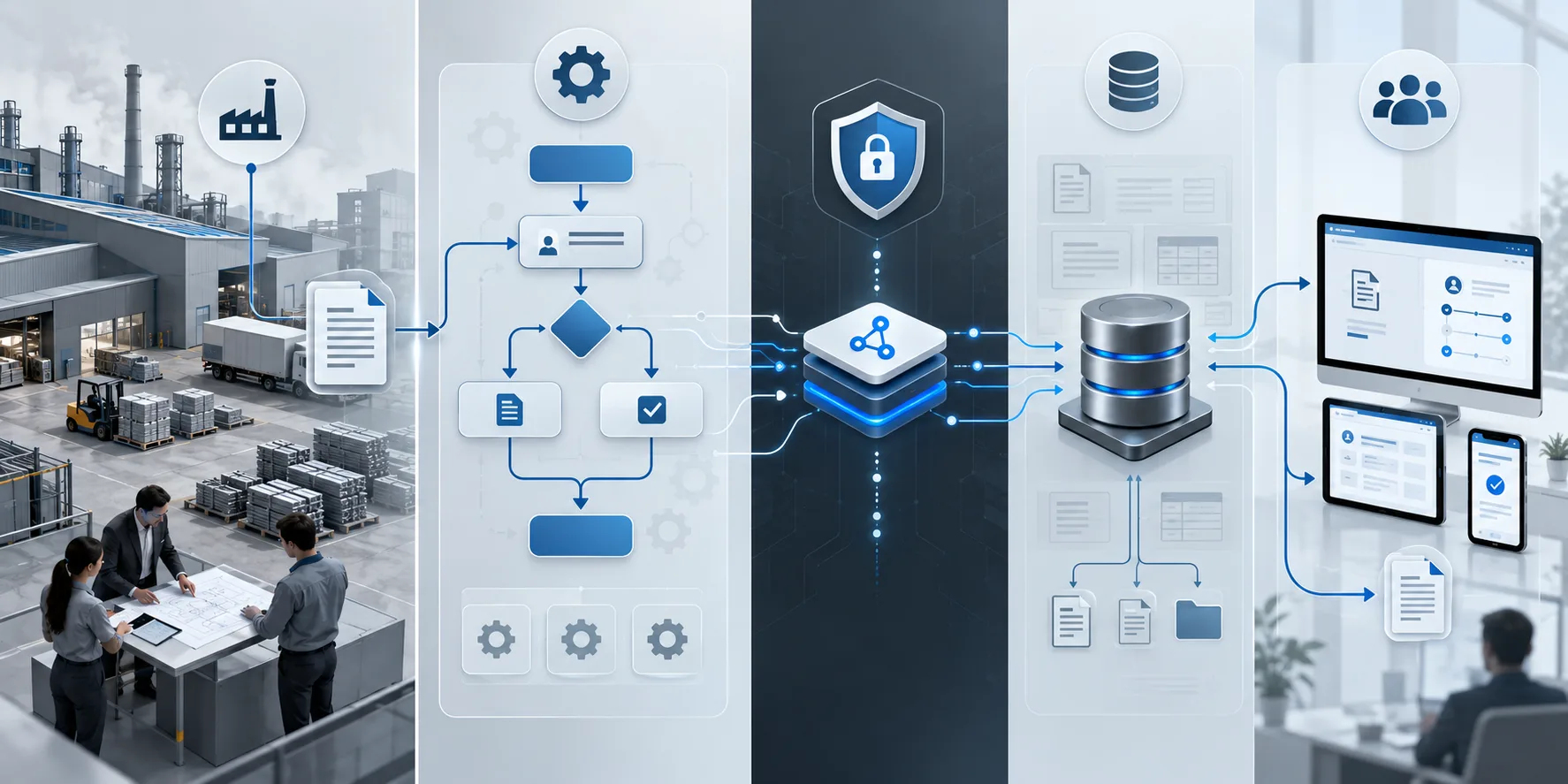
We partner from discovery, normalized relational architecture, and UI engineering through production deployment, automated backup topologies, and ongoing SLA maintenance.
Replace Manual Processes & Spreadsheets
Critical operational knowledge and pricing rules are trapped in personal spreadsheets and email threads.
Replace Fragmented Point Solutions
Your organization pays for 5+ separate subscription tools that don't sync, forcing employees to dual-enter data.
Extend an Existing Core System
Your current software handles 70% of operations, but critical industry-specific workflows cannot be customized.
Modernize an Aging Application
An existing custom system is difficult to maintain, lacks mobile responsiveness, or runs on outdated frameworks.
Custom Software or Off-the-Shelf?
Neither approach is universally better; the right choice depends on whether your workflows are standard or form a core part of your competitive advantage.
Off-the-Shelf Software
Standardized WorkflowsBest for standard back-office tasks where workflows can conform to generic industry conventions.
- Predefined industry standard flows
- Fixed configuration & rigid menus
- Vendor-controlled product roadmap
- Compounding per-seat monthly license fees
- Locked within vendor multi-tenant cloud
Custom Software (Rudram)
Engineered for Your ModelBest when your operating model, approval hierarchies, and calculation rules form your core advantage.
- 100% designed around your business rules
- Tailored calculations & approval matrices
- Purpose-built API connectors & data sync
- Asset ownership with predictable hosting
- 100% source code, schema & data ownership
How We Approach Custom Software Development
We follow a disciplined, transparent 8-stage delivery framework that turns complex business requirements into robust, maintainable production software.
Discover
Understand business goals, workflows, and operational requirements.
Define
Translate requirements into functional specs, roles, and scope matrices.
Architect
Design normalized relational schemas, API contracts, and security layers.
Design
Create intuitive, accessible user interfaces and interactive prototypes.
Build
Write clean, maintainable backend and frontend code using proven frameworks.
Integrate
Connect third-party APIs, legacy databases, WhatsApp, and payment gateways.
Test
Validate functionality, RBAC permissions, load performance, and security.
Deploy & Evolve
Production cloud release, staff onboarding, and ongoing SLA maintenance.
Technology Chosen for the Requirement
Technology choices follow business requirements, maintainability, and security. We build on proven, stable, enterprise-grade open-source foundations.
- Zero bloat: lightweight, highly performant tech choices
- Normalized relational schemas with ACID transaction safety
- Strict OWASP compliance and role-based data encryption
Software We've Built
Rudram develops and operates its own software products, giving our engineering team practical experience in building, securing, and evolving business applications.
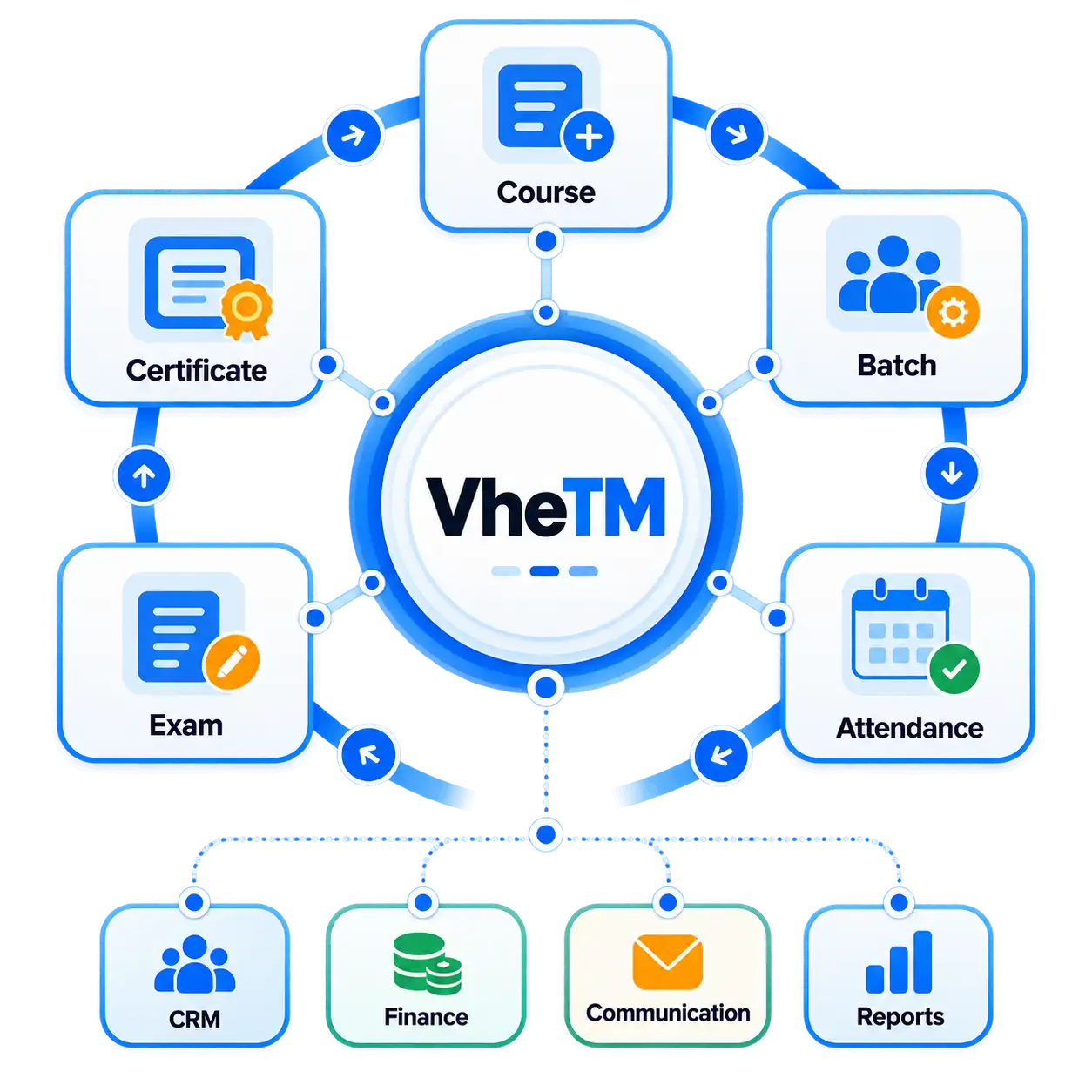
VheTM
Full-lifecycle training management ERP platform powering course batch logistics, corporate client invoicing, trainee registers, and WhatsApp automation.
- Multi-branch training batch scheduling & room allocation
- Automated corporate quotation-to-invoicing pipeline
- Integrated WhatsApp student messaging & digital certificates
Software Built Around Industry Requirements
Business software cannot be designed in a vacuum. Rudram applies domain understanding to architect software matching industry-specific operational rules.
Real-World Engineering Delivery
How Rudram custom software engineering connects workflows, automates administrative bottlenecks, and delivers operational clarity for real organizations.

Knowledge Grid Academy
Middle EastMulti-branch operations struggled with disconnected spreadsheets for corporate batch scheduling, manual trainee attendance records, and slow corporate billing reconciliations.
Engineered a centralized custom training management platform unifying corporate client contracts, instructor schedules, automated attendance registers, and invoicing.
Eliminated duplicate data entry across 3 branch locations, reduced invoicing turnaround from days to minutes, and provided real-time corporate compliance visibility.

Polyglot Institute
InternationalHigh trainee volume and diverse international certification tracks caused administrative overhead in student registrations, examination scheduling, and certificate issuance.
Developed custom student lifecycle modules, integrated automated course fee billing, and implemented digital certificate generation with verifiable security codes.
Accelerated student registration workflows by 70%, automated examination scheduling, and secured digital certificate delivery across all learning tracks.
Frequently Asked Questions About Custom Software
Clear, transparent answers about our custom software engineering, IP ownership, integration models, and support SLAs.
What is custom software development?
Custom software development is the process of designing, engineering, deploying, and maintaining software tailored specifically to an organization's unique business processes, workflows, and operational requirements. Unlike commercial off-the-shelf software, custom software is engineered from the ground up to fit your business rather than forcing your business to adapt to the software.
When should a business consider custom software instead of off-the-shelf tools?
A business should consider custom software when existing packaged software cannot support its proprietary workflows, when teams rely heavily on manual spreadsheets and workarounds, when multiple disconnected tools create severe data silos, or when the organization's operating model is a primary source of competitive advantage.
Can Rudram customize or extend an existing application?
Yes. We frequently build companion modules, custom reporting dashboards, and API integration layers that extend the capabilities of existing systems. If an application is viable but lacks specific functionality, extending it is often the most cost-effective and low-risk approach.
Can custom software integrate with our existing systems?
Absolutely. We design secure RESTful APIs, webhooks, and database connectors to integrate custom software with accounting software, CRMs, ERPs, payment gateways, messaging tools (like WhatsApp), and legacy databases, ensuring unified data flow across your organization.
Can Rudram build an ERP or complete business management system?
Yes. We specialize in engineering modular ERP platforms that unify sales, invoicing, double-entry accounting, payroll, and industry-specific workflows (such as training or education management) into a single interconnected system tailored to your operating model.
Can an existing application be modernized instead of rebuilt from scratch?
Yes. Through our Legacy Application Modernization service, we can refactor legacy codebases, sanitize and migrate databases, upgrade underlying frameworks, and modernize user interfaces while preserving the core business logic and operational data your team relies on daily.
How does a custom software development project begin?
Every project begins with a structured Discovery phase. We review your current workflows, technical environment, and operational goals. Following discovery, we prepare a clear functional scope, system architecture blueprint, and milestone roadmap before any engineering work begins.
Who owns the intellectual property (IP) and source code?
You do. Upon project completion and handover, you retain 100% ownership of the custom application source code, relational database schemas, and intellectual property developed for your project, with zero vendor lock-in.
Have a Business Requirement That Standard Software Can't Solve?
Let's discuss your workflows, existing systems and requirements to determine the right software approach for your organization.